
Why Consider a Vision Trip

Post Icon

My wife and I recently returned from a journey across a country in North Africa. During our journey we visited six different cities over a period of two and a half weeks. In three of the cities, we travelled up to a high place and from there we could see almost the entirety of the city below. The cities were all different sizes and offered their own unique views, but one thing remained constant in all three: I was reminded just how small I truly am in this great big world that God created. I am a minuscule part of a much bigger plan. So, while my wife and I set out to cast a vision for potential overseas work, the stark reality was that the vision has already been cast, and it is up to us to discover how we fit into what God is already doing.

If you are sitting here and believe God is calling you to the mission field, you probably have many questions. Embarking on a vision trip is one way to seek out some answers to those questions. And for those who are unfamiliar with the concept of a vision trip: it is a short, immersive trip designed to expose one to missionary work and culture in a particular region to better discern a calling to location and partnership. From my recent experience, here are four reasons to consider a vision trip:
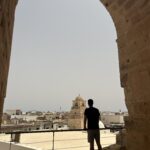
... the stark reality was that the vision has already been cast, and it is up to us to discover how we fit into what God is already doing.

1. Distinguish Reality from Perception

Maybe the best reason to consider a vision trip is to distinguish between what is reality versus what is just perception. In a world where there is a plethora of information at our fingertips, not all of that information is going to be accurate or truly representative. A ten-minute video, a detailed article, or even a creative story may form a well-rounded perception of a location or people; but nothing can quite replicate actual “boots on the ground” experience. Most people considering long-term overseas work desire a knowledge of the context they are about to possibly enter. A context that has been shaped and formed by experiencing the location and people firsthand, and not through the lens of a second party. For my wife, this vision trip provided a looking glass into field work amidst a Muslim nation, something that was very foreign and unknown to her. The trip was able to transform her perception of a Muslim nation into a reality.

I felt God speaking to me about certain locations, drawing me more to some areas as we ventured through the streets and markets.

2. A Clearer Outlet for God to Speak

I believe that God can speak to anyone, through any means, at any time, and at any place. But I also believe a vision trip can provide a clearer outlet for God to speak clarity into a person’s decisions. I was overseas when I felt God, in a nonaudible means, call me to overseas work. In the same way, during this vision trip, I felt God speaking to me about certain locations, drawing me more to some areas as we ventured through the streets and markets. God also used those who lived and worked there to share a glimpse of what a possible life and ministry would resemble in that part of the world. Yes, all the same conversations could have happened through a video call. However, being present in that place with the people gave these conversations a greater weight. It also provided a clearer picture of what God was doing and how he would want us to possible fit in there. It was a feeling I am all too certain I would not have felt had I not traveled to North Africa.

3. Fosters a Love for the People

Considering the bulk of overseas work revolves around building relationships with the people, taking time to interact with the people is of great priority during a vision trip. I have often heard from workers who live in more difficult places to live, that it is the love of the people that keeps them there (and of course obedience to God’s will). Even in places that offer more favorable living conditions, difficulties are sure to arise. A reliance on the sovereignty of God and a love for the people can provide the strength to persevere through difficulties. Spending time with locals begins the process of fostering a love for those people as you consider the possibility of calling that location home.

4. Meet with Workers and See the Work Firsthand

When evaluating the possibilities for overseas missions, there are many factors to consider. Location has been the primary topic so far, but teaming is another important criterion to consider. Different teams offer different personalities, leadership styles, strategies, and required skill sets. Meeting with as many workers as you can during your trip will give a broader perspective of team dynamics and reveal areas of preference or weakness as well as a vision for the team. Additionally, different people provide different points of wisdom and direction. You will be provided with a wealth of information in which to sift through. You’ll have the opportunity to develop a sense of what role or job best fits the gifts and affinities God has granted you. And most importantly, through meeting with workers on the field, you can witness firsthand how they are fulfilling the Great Commission and interacting with the local population.

Bonus: Take Time to be a Tourist

Hey, this should probably not top the list of reasons for a vision trip, but it will likely be a part of the journey, nonetheless. Many of those who embark on vision trips to more secure countries are entering the country as tourists. Spending time seeing the sites is not going to reveal the authenticity of the people nor the city, but it does reveal much about a country’s culture and heritage. Simply just walking through a crowded market street, one can silently observe what is important to a country and what the people want to show off to the world. Moreover, it is most likely you will be arriving on a tourist visa so spending some time being a tourist during your stay will give validity to your purpose for being there.

Kevin Jackson

Kevin Jackson is from North Carolina and currently pursuing an MDiv degree in International Church Planting at Southeastern Seminary. He spent two years overseas in Central Asia teaching English and coaching basketball. He enjoys spending time with his wife, cooking new foods, all things sports, going to a coffee shop, and writing. 

Subscribe to the CGCS Newsletter

to receive a biweekly roundup of current mission resources directly in your inbox.