
The Military Needs Missionaries

Post Icon

“These things we do, that others may live.” — United States Air Force Pararescue Motto

The world groans with the pains and scars of war and death that stretch all the way back to the first days after our rebellious expulsion from the Garden of Eden. Humanity is not spared from its own sin and destruction. Tragically, it is often the innocent, the poor, and the oppressed who pay the price.

Fortunately, the world is not without hope. The Lord instituted governments to serve on earth as a means to deter evil and liberate the oppressed. The military serves as a hammer against evil, preventing those who seek to do harm from continuing their tyrannical reign. Yet the weight of the pain servicemembers experience can pierce even the toughest armor. This proximity to war burdens the soul and creates wounds that no doctor or bandage can heal. Only Christ is fully sufficient to offer lasting, transcendent hope to those who stand in the gap for the innocent.

I have personally seen this in the six years I’ve served in the Army. I remember that during my training to serve as a chaplain, I was given a scenario in which I had one minute to prepare a two-minute speech to a group of soldiers who had just returned from a combat operation. During that mission, they lost 60% of their unit, and after my speech, they would return to the battlefield. The instructor said, “You have one minute to prepare. Go.”

I thought, “What shall I say in such troubled times?” The only answer is the gospel. I preached on the hope we have in Christ, for as He says in John 16, “Take heart, for I have overcome the world.” When I finished my speech, the instructor said, “Great, but if I weren’t a Christian, I don’t know what hope I would have found in that.”

I thought to myself, “Well, to be honest, there is none. Christ is our only hope in this broken world.”
Soldiers do not need shallow and vapid encouragement; they need the Gospel.

Oftentimes, military servicemembers can create a wall in their hearts, attempting to block out the pain they feel and experience in hopes of brushing it off as a display of “masculinity” or stoicism. In reality, the brokenness they encounter acts like water dripping onto solid rock. Over time, when not addressed, it chips away at the soul and feels like an enormous weight on the heart. This causes many in the military to turn to vices that create more problems than they solve. In my experience in both Combat Arms and Combat Support, alcoholism, sexual sin, and divorce are rampant, which further exacerbates the deeper trauma of the soul. Many eventually turn to suicide, not as a way to harm themselves, but rather to make the pain and stress stop. So many feel as though the only way to cope with the horrors of war is to indulge in a destructive lifestyle. Yet they are not without hope.

The Lord had war in mind when He said that He will wipe away every tear. He sees the heart of a soldier and sees a man made in His image—one for whom He died so that he may have life. Verses like John 10:10 pierce deep into the soul when Jesus declares that He came to “bring life and bring it abundantly.” This transcendent hope is infinitely greater than the evil experienced in war. Evil is a reality in war. It is unavoidable, but Christ is greater. Soldiers do not need shallow and vapid encouragement; they need the Gospel. The chaplain serves not as a spiritual guru, but as a vessel of our Lord to bring the soldier to God and God to the soldier. Yet the chaplain does not serve for fame or bravado, but rather as a way to live out a sacrificial life so that others may live.

The military needs the Gospel and is arguably one of the most unreached people groups in America. By every metric used to qualify a people group, the military—and each branch within it—fits such categories. Just listen to two soldiers speak and you’ll realize the military has its own language. I often feel bad for my civilian friends when I meet a fellow soldier because we use more acronyms than words! The military has its own uniforms, customs and traditions, hierarchy, defined borders, and entry requirements.

I remember a time when I spoke to a former soldier who served in the first Gulf War. He asked me what I did for work, and I said I was a Chaplain Candidate. He replied, “Oh, a chaplain! Okay, I can talk to you.” By virtue of being part of the people group that is the Army, I was able to connect with a man who otherwise had no outlet for his lived experiences and pain.

There is real trouble in the reality of war, but we need not fear, for the LORD God is with us wherever we go, including in the literal trenches.

For the reader who has never served, take heart, for you, too, can help care for servicemembers. There are a few simple things you can do to help. For instance, get to know them, display genuine love through prayer and service, allow them to share their hearts and experiences, and show them the purpose found in Christ. Soldiers long for a purpose-driven life. It is instilled in us from the very beginning of our service.

“These things we do, that others may live.” That is the motto of the Air Force’s special operations medics. That heart to serve others drives the life of the servicemember. A love for others is there; they just need to be shown a love for Christ.

The military needs missionaries.

It is a hard mission field, as it often brings the Christian onto the battlefield, yet that is where the ministry is most profound. There is real trouble in the reality of war, but we need not fear, for the LORD God is with us wherever we go, including in the literal trenches. Oh, what a joy it is to suffer for the sake of Christ, just as Peter and John left the council “rejoicing that they were considered worthy to suffer for the Name.” This is the heart of God: to seek and save the lost, especially the broken soldier.

Stephen Jensen

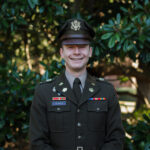
First Lieutenant Stephen Jensen is a student at Southeastern. He is studying to complete his Master of Divinity in Christian Ministry. He commissioned into the United States Army as a Field Artillery Officer and now serves in the Army Reserves as a Chaplain Candidate. He hopes to serve on Active Duty as a Chaplain upon graduation. Before joining the Army, Stephen spent time serving on the mission field in India, Nepal, and Norway. 

Subscribe to the CGCS Newsletter

to receive a biweekly roundup of current mission resources directly in your inbox.