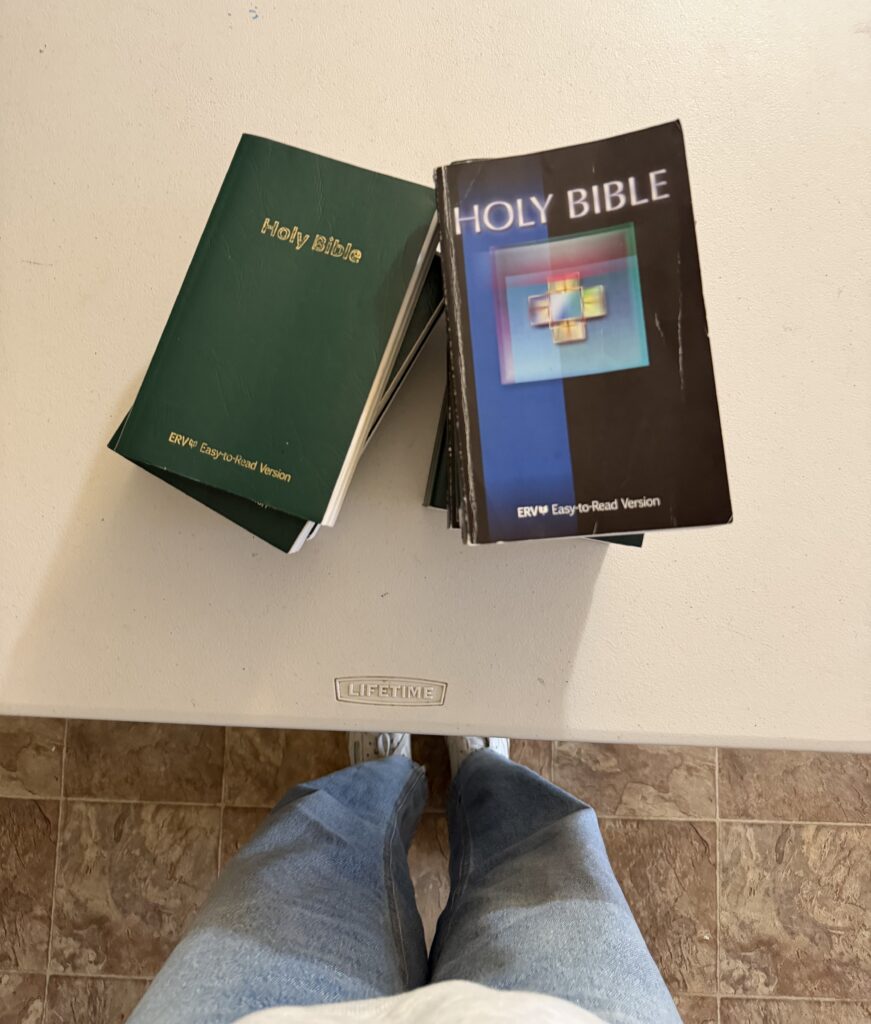
For me, an American girl who has suffered hardly any persecution, the idea of loving my enemy isn’t that radical. But for most of these girls, given the situations they fled when coming to America as refugees, this idea is almost inconceivable. While the discussion was difficult—and we clarified that Christ is by no means condoning abuse here—that day’s discussion stands out as one of my favorites. The girls were engaged, they cared, and they wanted to understand Christ rightly.
This is the challenge and joy of cross-cultural ministry. Passages that feel incredibly familiar to you are seen anew from a completely different perspective as you witness someone’s lived experiences affect how they approach the text, showing just how much one’s cultural background influences how God’s Word impacts them.
As we moved through the narrative of Christ, we eventually made it to His crucifixion, where Jesus states, “Father, forgive them, for they know not what they do” (Luke 23:34). As we read this, the energy in the room was somber and quiet, and I explained that this is Christ living out His teaching of “loving your enemies” to its fullest extent—asking God to forgive them as they killed Him, and ultimately how He has forgiven us. Though our sin makes us enemies of God, Christ died for us.
I would not have been able to explain the gospel narrative to these girls as fully if not for my training at Southeastern. I have gained so much knowledge through my studies, been sharpened by my peers as we discussed eschatology after class, worked together on case studies, and shared the gospel on mission trips. However, none of that preparation matters if I am not putting it into practice and doing the work of sharing the gospel with those who have not heard.
Getting to meet with these young girls, share the gospel with them, and answer their questions about the Bible has made me feel that all the training I have acquired is being put to use. The affection for God that my education has grown in me is being poured out as a drink offering for others. I almost can’t believe I have been in seminary for years without this ministry avenue. If you want to learn more about the ministry of Refugee Hope Partners, you can click here.
Don’t let your time at Southeastern be marked by theological education alone but use this season to pour out all that has been poured into you. The Great Commission commands it, and your soul will be ministered to as you watch others fall in love with Christ the way you have. My encouragement to anyone reading this would be to pray and humbly ask the Lord how He desires them to fulfill the Great Commission during their time at Southeastern. Don’t let it be a waste.