Incorporating Missions into Family Worship

Post Icon

The Great Commission has been important to our family since before we were a family. My husband and I, before we met, both experienced a call to missions in our early twenties. And while the practical application of that calling has not turned out quite like we expected (at least, not yet), the Lord has used our calling and passion for international missions to allow us to participate in His mission stateside. We have been mobilizers, cheerleaders, supporters, and short-term participants in the Great Commission alongside our many friends who have dedicated their lives to making the gospel known around the world.

Perhaps most importantly, we have been tasked with raising up disciples within our own family: our two children. Our priority is teaching our kids the gospel and praying for their salvation. To that end, we began a family worship time that has grown as our kids have grown. If you are curious about what our family worship routine looks like, you can find it here.

We’ve also sought to include the Great Commission as a vital component of our kids’ discipleship. We want them to know and believe the gospel, but we also want them to know what to do with it once (Lord willing), they believe. To that end, we’ve incorporated missions into our family discipleship routine. Talk of missions, missionaries, and sharing the gospel has become normal and familiar to our kids.

For many families, sharing the gospel with their kids, teaching them about Jesus, and reading Bible stories with them are likely familiar habits. If you are interested in incorporating teaching about missions with your kids, here are some ways to do that:
Simply expanding our kids’ minds to know more about the world can open opportunities to teach them about God’s love for the nations.

Show Them the World

I don’t mean that families should spend thousands of dollars taking young children on trips abroad. Instead, teach kids that there are countries, cultures, and people far beyond their small world. Show them a map or atlas of the world, pick a country, and learn a new fact about it. Then pray for the people of that country to know Jesus. Simply expanding our kids’ minds to know more about the world can open opportunities to teach them about God’s love for the nations.

That said, allowing older, believing children (think, mid to late teens) to go on an international mission trip can be a vital part of their discipleship. My husband and I were both significantly formed by the international mission trips we went on as teenagers, and it played a big role in how we understood God’s call to make disciples of all nations.

Pray for Missionaries

By nature of being educated by and working for a Great Commission seminary, we have many friends who serve the Lord around the world. This means we’ve collected quite the stack of missionary prayer cards . As we became more intentional about praying for these friends with our kids, we put a magnetic whiteboard up in their room. All of our prayer cards now hang on that whiteboard (under magnets my husband brings to our kids from the different countries he visits on short-term mission trips).

Between the magnets and the prayer cards, that whiteboard represents a wide variety of countries and the missionaries who serve there. It is a reminder that God is working to make His name known around the world. Every night, each of our kids chooses someone to pray for, and even though they’ve not met most of them, they feel like they know the missionaries they pray for nightly.

There are a variety of ways to display missionary prayer cards. You could use a bulletin board, string and clothespins, a photo album, or one of those photo display boards with the ribbons (you know, the ones that every Millennial girl had in their dorm room in the early 2000s). I’ve even heard someone talk about loading prayer cards onto a digital picture frame.

If you don’t have access to prayer cards, you can use other resources to pray for missions and missionaries. Postcards depicting countries around the world are easily available to purchase online. The IMB has various prayer resources you can download and print. You can check out the Joshua Project or Operation World websites for information about unreached people groups. Or, download prayer cards from the CGCS website and pray for these missionaries with your kids.

It can be easy to grow weary of our kids’ questions and curiosity, but with this comes a huge opportunity to build a solid biblical and theological foundation in them.

Be Intentional with Conversations

In the first year or two of our kids’ lives, it dawned on me that as their parents, we have to teach them almost everything that we assume would be natural: how to walk with shoes on, how to drink from a straw, how to pronounce words correctly, not to stick their fingers in an electrical socket, etc. They are naturally curious about everything and with good reason: everything is new to them!

It can be easy to grow weary of our kids’ questions and curiosity, but with this comes a huge opportunity to build a solid biblical and theological foundation in them. There are two primary ways you can do this. First, pay attention to their questions, particularly the deep life questions kids tend to ask, and consider how you might answer in a way that points them to the gospel and the Great Commission. Don’t be afraid to use terminology that they might not understand at first. This gives you opportunity for even further teaching. Second, start paying attention to things around you that you could point out to your kids.  Here are a few examples of conversations we’ve had recently with our kids (ages 5 and 7):

  • One evening, while praying for our missionary friends, I prayed the Lord would protect them from spiritual warfare. Once finished, our 5-year-old asked what “spiritual warfare” meant. Even though it was bedtime, we took five or ten minutes to explain the idea of spiritual warfare to our kids. Though that’s a darker subject, we believe it’s important we don’t avoid those kinds of conversations but have them on a level appropriate for our kids.
  • On a hiking trip to a busy state park, our kids noticed a Muslim man standing in an open spot by the parking lot doing his evening prayers. They naturally asked us what he was doing, so it gave us an opportunity to explain about world religions and how the gospel speaks to those who follow them.
  • Whenever my husband goes on a short-term mission trip, we try to remind the kids why daddy is going to be gone. In some ways, it’s a sacrifice for all of us for him to be gone, but it gives us the opportunity to demonstrate that taking the gospel to the nations is worthy of our sacrifice. He sends me updates on the work he and his students are doing and I get to share that with our kids, too. On a recent trip, he told me about a man they’d met and shared the gospel with and that the man was interested in learning more about Jesus. Our kids were really excited to hear that and even asked us about that man months after my husband had returned home.

As parents, it can be easy to become overwhelmed in the “shoulds” of parenting, from what our kids should eat, to how they should sleep, to where they should go to school. Above all, though, our biggest should is discipling our children to knowing and loving God, praying for their salvation, and teaching them to obey God’s Great Commission.

Meredith Cook

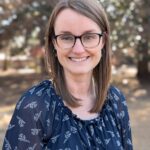
Meredith is married to Keelan and mom to two mini Cooks. She is the grant coordinator for Southeastern Baptist Theological Seminary and author of Go Tell Everyone: 9 Missionaries Who Shared the Good News. You can find her online at meredithcook.net.

Subscribe to the CGCS Newsletter

to receive a biweekly roundup of current mission resources directly in your inbox.

This field is for validation purposes and should be left unchanged.