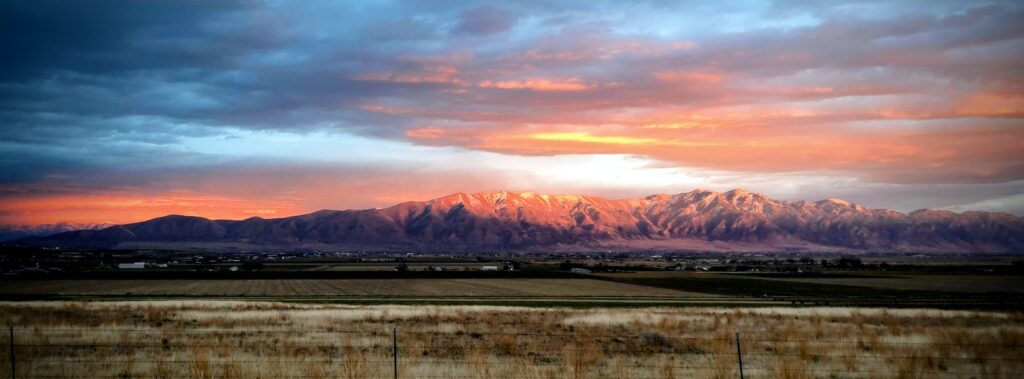
In Utah, planting an evangelical church is the spiritual equivalent of farming in the desert. In fact, this region is ominously known as the Church Planters Graveyard. The statistics are staggering: only about 1.6% of the population here in Box Elder County identifies as evangelical Christian. This isn’t post-Christian secularism or cultural-Christianity found in other cities across North America; this is a generationally devout, highly insulated culture dominated by the LDS church. The spiritual and social fabric is tightly woven, and as an outsider planting an SBC church, you are not merely offering an alternative—you are asking people to risk their entire social, familial, and cultural ecosystems.
The “Southern Baptist playbook” that we employed back home—mass mailers, big event evangelism, and opening the doors to see who walks in—simply doesn’t take root here. The seed bounces off the soil.
Watering at the Root
And as I contemplated how to make the best out of my garden, I also wondered how we were going to make headway in gathering people to a church that seemed unwanted by so many in this context. But I was reminded of one of those lessons I had learned from my grandpa “You gotta change the way you feed it. You don’t grow the seed anyway. You just tend the dirt.”
He was right. To grow anything in Utah, you have to amend the soil. You have to haul in compost, mix in peat moss to balance the pH, and break up the clay by hand. And you have to change how you water. You abandon the heavy, overhead soaking of the South and install drip lines—slow, steady, unglamorous drops of water delivered consistently right to the root over hours and days.
It was an evangelistic epiphany. We had to stop looking for the sudden, massive harvest and instead started laying down spiritual drip lines. In a culture where trust in outsiders is exceptionally low, evangelism can’t be a one-time presentation. It has to be built on relational equity, drop by drop. It’s sharing meals, helping neighbors shovel snow or care for their livestock, coaching Rec League sports, and often being a consistent, loving presence before a single theological conversation happens.
We have to do the grueling work of amending the soil. We have to learn to celebrate the incredibly slow growth. When you are planting in 1.6% soil, you don’t measure success by a packed sanctuary; you measure it by a neighbor finally feeling safe enough to ask a tough theological question they have been wrestling with over a meal or a front yard conversation.
A Bountiful Harvest Takes Time
While we have seen some very encouraging signs in our church plant of not only numerical growth, but spiritual growth, we understand that it may take longer to see this church produce indigenous leaders who are called and equipped to plant another church. We might have to spend more time individually discipling people who are deconstructing faith in a way we never encountered in the heavily Christian south. And like the seeds in my garden, our church planting team is just getting those seeds in the ground.
My garden may take several seasons of hauling compost and adjusting drip lines before producing a yield that mirrors my grandfather’s, so too we might labor for years before we see Redemption Bear River establish deep roots in the community. But just as I hope in the moment when I can pick a mess of okra from my Utah garden and fry it up, even more do I hope in the promise that the Lord of the harvest will send laborers to join us in the great work He is accomplishing here, and to bring sinful men from death to life through the preaching of the Gospel, albeit one heart at a time.
Planting a church in Utah is the hardest thing our family has ever done. The air is dry, the sun is hot, and the gospel work sometimes feels agonizingly slow. We are not seeing hundreds saved in a weekend. But occasionally, the hard ground breaks. A heart is changed. And a new life, born from the free gift of God’s grace in Christ begins to grow.
When it does, I think of the seeds sown from my grandfather’s worn hands. I think about how the Gospel—the true, heirloom seed of the Word—contains exactly the same power here in the shadows of the Wasatch mountains as it does in the place we used to call home.
The seed hasn’t lost its power.
We just have to learn how to tend the Utah dirt.